Industry expertise / Retail & E-commerce

Custom E-commerce Software for Complex Retail Operations

When your catalog, checkout and business systems stop working together, online growth becomes harder. We build and integrate commerce experiences around the way your business operates.

  • Connect product data, pricing and existing systems
  • Improve purchasing journeys, shipping and payment workflows
  • Modernize storefronts while protecting operational continuity

Concept diagram · Not a client system screenshot

Common operational bottlenecks

Recognize any of these challenges?

Start with the business problem. The software architecture should follow from the actual workflow, not the other way around.

01Catalogs and disconnected systems

Product data is managed in too many places

A store may need to maintain thousands of products, categories, prices and URLs while an existing commerce platform continues to own the source data.

HOW WE APPROACH IT

Plan a synchronization layer, define a reliable source of truth, and create a storefront that reads product and category data consistently.

  • Product and category data mapping
  • Incremental synchronization patterns
  • Clean product URLs and category navigation
Discuss this problem
02Checkout and buying journeys

Checkout rules become difficult to maintain

Different payment providers, currencies, delivery zones and shipping rates can make the checkout workflow harder to operate and improve.

HOW WE APPROACH IT

Design modular checkout and integration workflows so payment options, address handling and delivery calculations fit real business requirements.

  • Payment gateway integration
  • Location-based checkout considerations
  • Shipping rules and order event tracking
Discuss this problem
What we can help you build

Solutions that fit the systems you already use

Choose targeted enhancements, custom integrations, or a larger platform modernization based on your current setup.

Custom storefront development

Fast, maintainable web storefronts aligned with your catalog and buying workflows.

Catalog and API integration

Connect product and category information across existing commerce systems.

Payments and shipping

Integrate gateways, delivery calculations and order-related workflows.

Modernization and support

Improve existing stores without assuming every system needs to be replaced.

Implementation example / Published workflow visuals

Modernizing an established catalog-driven online store

An existing Magento-based commerce environment is connected to a modern Next.js storefront through a Laravel integration layer. The published workflow highlights catalog synchronization, storefront architecture and checkout integration considerations using approved visuals.

Implementation evidence
THE CHALLENGE

Preserve an established product catalog and purchasing workflows while introducing a custom storefront and integration architecture.

TECHNICAL APPROACH

Separate the customer-facing interface from legacy platform concerns, synchronize the required product and category fields, and integrate appropriate checkout services.

SOLUTION AREAS
  • Existing Magento commerce data
  • Product/category synchronization
  • Next.js storefront + Laravel APIs
  • Gateway and checkout integrations
Outcome & Business Impact
  • Optimized navigation and shopping experienceThe Next.js interface supports optimized rendering and smoother product-to-category navigation, with layouts designed for desktop and mobile shopping.
  • Greater control of the storefrontA custom frontend provides flexibility to adapt product presentation, collection navigation, purchase actions and business-specific customer journeys beyond standard Magento theme limitations.
  • Product and category workflow automationDedicated product/category synchronization and mapping support coordinated catalog updates without requiring the same data to be managed independently in multiple storefront systems.
View all business benefits

Inside the workflow

Explore visuals related to the described workflow.

Vedic Vaani Shaligrams category page with collection navigation and product grid
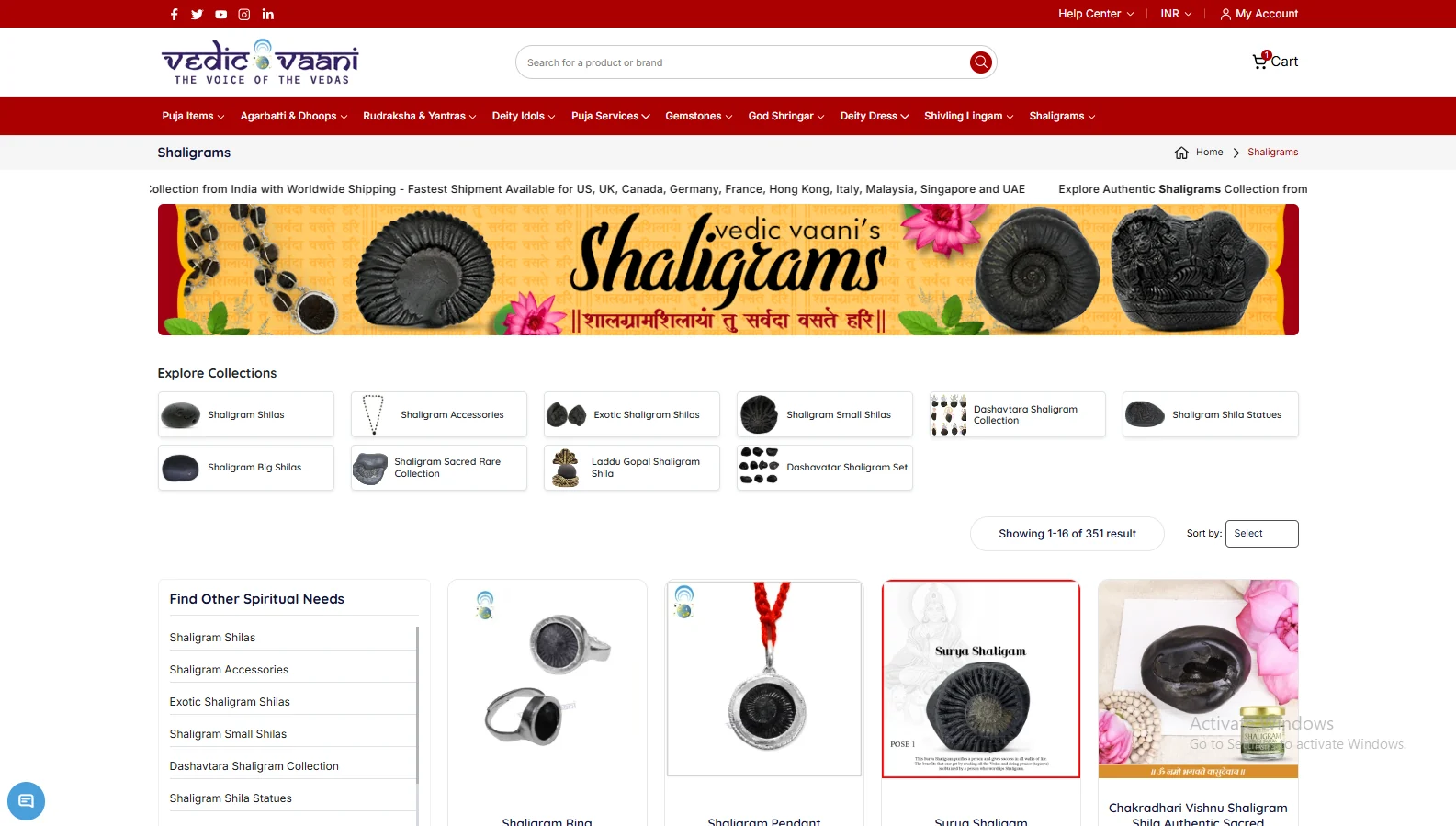
Actual application screenshotCollection browsing and product catalogActual Shaligrams collection screen showing collection navigation, filters, category groups and product cards.
Vedic Vaani product detail page with product options and add to cart
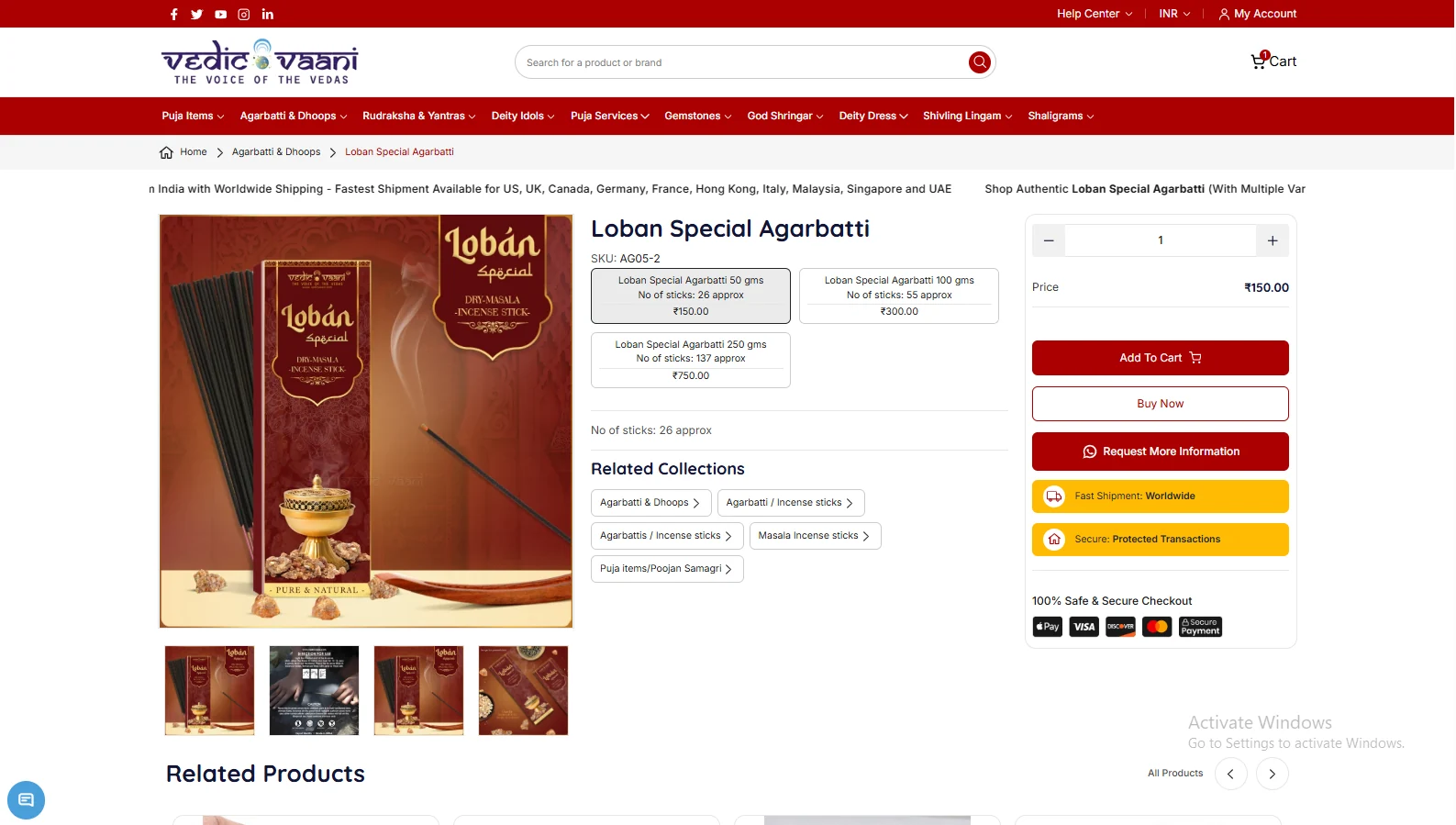
Actual application screenshotProduct details and purchase actionsActual product page showing purchasable options, product imagery, related collections and purchase controls.
Vedic Vaani checkout page with shipping address, order summary and payment selection
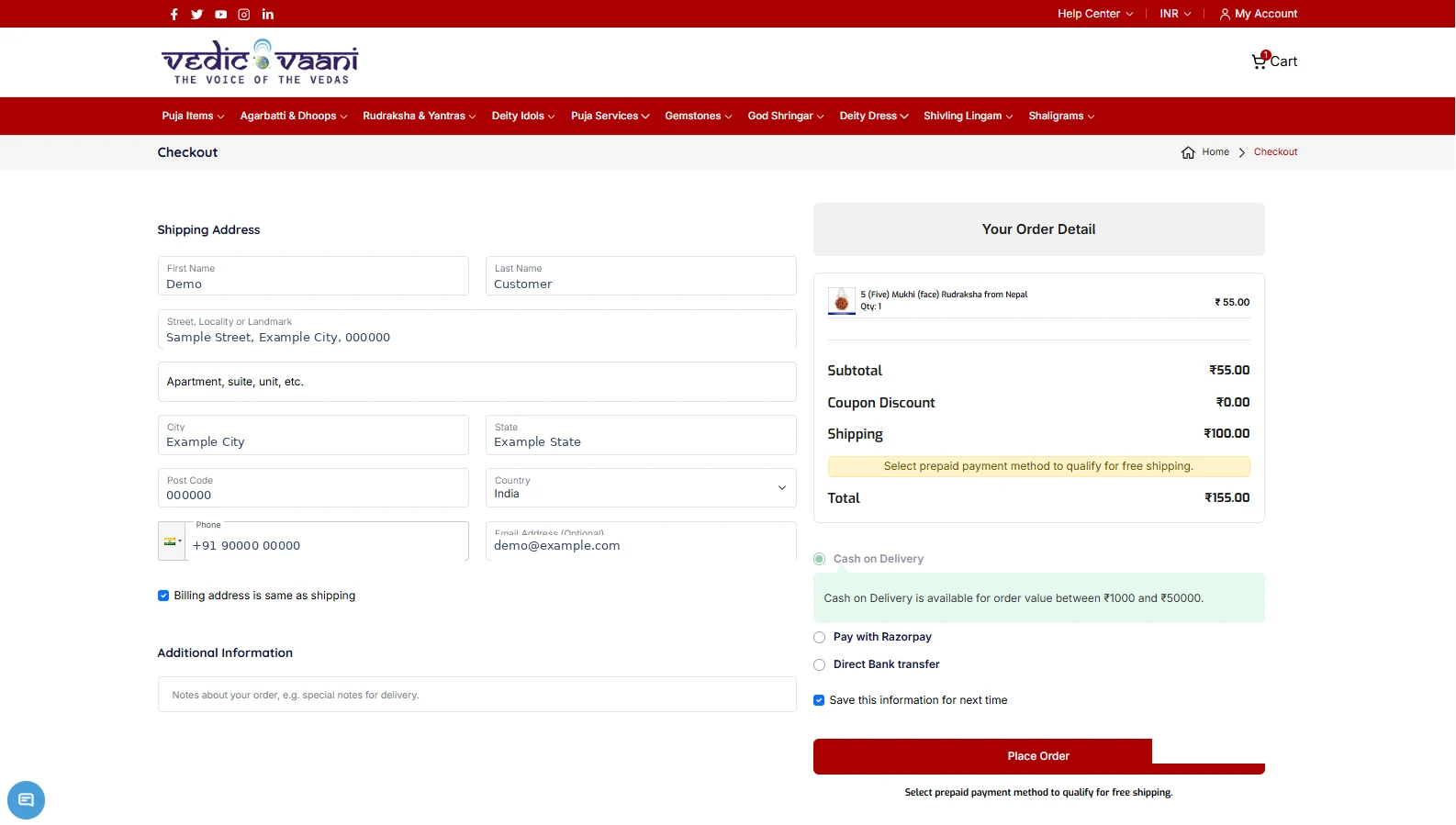
Actual screenshot · sensitive data replacedCheckout, shipping and payment selectionCheckout interface showing shipping fields, order totals and available payment choices.
Vedic Vaani mobile store page displaying product cards and cart buttons
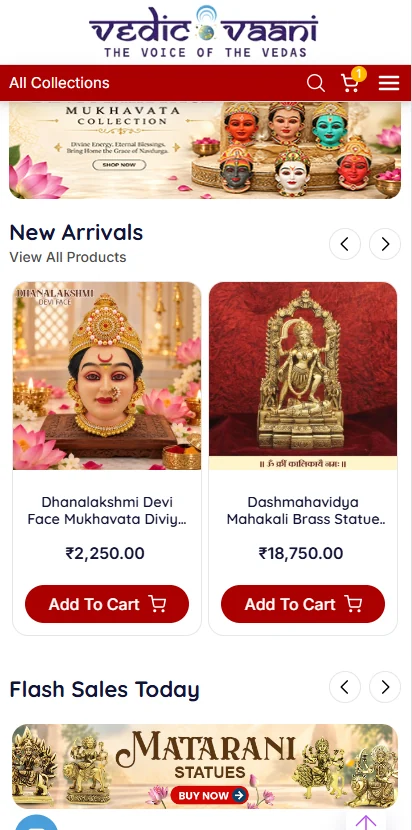
Actual application screenshotMobile storefront experienceActual narrow-screen storefront view showing category navigation, promotional content, product cards and add-to-cart controls.
Detailed project walkthrough

Explore the business context, two operational challenges and the source-labeled workflow visuals.

Read Full Case Study
How we work

From an operational issue to a practical build plan

01

Understand the workflow

Review the current store, involved systems, constraints and pain points.

02

Design the integration

Define data ownership, modules, interfaces and expected outcomes.

03

Build and verify

Implement in phases, test edge cases and validate buying journeys.

04

Improve and support

Refine issues and plan ongoing technical support where needed.

Frequently asked questions

Questions businesses often ask

Can we modernize our storefront without replacing the existing backend?

Often, yes. An integration-first approach can retain the current commerce platform as a source of product or order data while introducing a new customer-facing experience. The appropriate architecture depends on your existing platform and integrations.

Can an e-commerce site support multiple payment gateways?

Yes, subject to each provider’s availability and integration requirements. We can evaluate how gateways fit your checkout, currency, settlement and reconciliation workflows.

What information is needed to evaluate our retail software requirements?

A summary of the current platform, catalog size, operational pain points, payment and shipping requirements, and desired outcomes is usually enough to begin a technical discussion.

LET'S DISCUSS YOUR PROJECT

What is slowing down your commerce operations?

Share your current systems and the issue you want to solve. We can help assess the practical next step.